VIRGINIA DARE TOMBSTONE
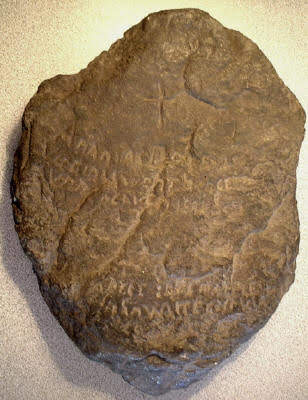
Brenau University Has An Exact Duplicate
The Chowan River Dare Stone: A Study of the Artifact
For more info go to: https://virginiadam-ge5c6ewk.manus.space/ or contact Stephen Horrillo at gotosteve@gmail.com
1. Discovery Circumstances
The first Dare Stone was reportedly found in September 1937 by Louis E. Hammond, a tourist from California . Hammond claimed he discovered the stone while searching for hickory nuts in a swamp on the east bank of the Chowan River near Edenton, North Carolina . Unable to decipher the inscription, which appeared to be in a foreign language, Hammond held onto the stone for two months before presenting it to historians at Emory University in Atlanta, Georgia, in November 1937 .
2. Physical Description
- Material: The stone is composed almost entirely of white vein quartz .
- Weight: It weighs approximately 21 pounds .
- Distinction: It is physically distinct from the later Dare Stones; the Chowan River stone is a 21-pound piece of veined quartz with small, deep lettering, whereas the subsequent stones are larger slabs of granite and sandstone with large, shallow inscriptions .
3. The Inscription
The stone bears carved text on both sides, signed with the initials “EWD,” attributed to Eleanor White Dare, daughter of Governor John White and mother of Virginia Dare .
Front (Epitaph side):
*“Ananias Dare & / Virginia Went Hence / Unto Heaven 1591 / Anye Englishman Shew / John White Govr Via.”*
Translation: Ananias Dare and Virginia went hence unto heaven 1591. Any Englishman show John White, Governor, via (this stone) .
Back (Message side):
“Father Soone After You / Goe for England Wee Cam / Hither. Onlie Misarie & Warre / Tow Yeere. Above Halfe Deade ere Tow / Yeere More From Sickenes Beine Foure & Twentie. / Salvage with Message of Shipp Unto Us. Smal / Space of Time they Affrite of Revenge Rann / Al Awaye. Wee Bleeve it Nott You. Soone After / Ye Salvages Faine Spirits Angrie. Suddaine / Murther Al Save Seaven. Mine Childe. Ananais to Slaine wth Much Misarie. / Burie Al Neere Foure Myles Easte This River / Uppon Small Hil. Names Writ Al Ther / On Rocke. Putt This Ther Alsoe. Salvage / Shew This Unto You & Hither Wee / Promise You to Give Greate / Plentie Presents. EWD” .
Summary of Message: The inscription details that after John White left for England, the colony endured two years of “Misarie & Warre.” Over half the colonists died of sickness, leaving only 24. Hostile “salvages” (savages) eventually killed all but seven of the remaining colonists. The message states that Ananias and Virginia Dare were among those slain. The survivors buried the dead near the river and placed this stone as a marker and message .
4. Initial Scholarly Reception
- Acquisition: Emory University did not wish to pursue the artifact. Dr. Haywood Pearce Jr., a history professor at Emory who was also Vice President of Brenau College, recommended the stone to his father, Dr. Haywood Pearce Sr. (President of Brenau). Brenau acquired the stone for $1,000 .
- Early Analysis: In a 1938 preliminary examination published in The Journal of Southern History, Pearce Jr. argued that the content was not incompatible with known historical facts, that the spelling conformed to expectations of Elizabethan orthography, and that the necessary tools for such an inscription were likely possessed by the colonists .
- Distinct Status: Unlike the 47 stones that followed, the first stone has always been regarded as being in a different category. The Library of Congress subject authority record notes that “its possible authenticity is widely conceded, even among academics” .
5. Recent Scientific Investigations (2016-2018)
In the 2010s, Brenau University President Ed Schrader, a geologist, initiated a new multidisciplinary study of the first stone .
- Sampling: Researchers used a diamond-tip saw to remove a tiny sample from the stone for geochemical analysis .
- Composition: Tests confirmed the stone is primarily white vein quartz. When cut, the interior was bright white, leading researchers to note that the original inscription would have been in stark contrast to the weathered exterior—an observation suggesting it was “a good choice for a Roanoke colonist but a poor one for a modern forger” .
- Trace Elements: Analysis revealed elevated traces of gold, selenium, and copper within the quartz. Schrader noted it is “very unusual to find elevated concentrations of all three of these metals together in vein quartz unless they occur in a mineralized zone or ore deposit,” a finding that could potentially link the stone to a specific geographic origin .
6. Current Location
The original Chowan River Dare Stone remains in the collection of Brenau University in Gainesville, Georgia. It is not part of the general display; viewing the stone requires a special appointment with the university president’s office .
For more info go to: https://virginiadam-ge5c6ewk.manus.space/ or contact Stephen Horrillo at gotosteve@gmail.com